For years, speculation around Prince Harry and Meghan Markle’s possible return to royal life has ebbed and flowed with every interview, lawsuit, and carefully worded statement. But recent whispers suggest the narrative may be shifting again — and this time, the tension has a clear focal point.
All About Meghan Markle and Prince Harry’s Annual Christmas Traditions
According to sources familiar with the Sussexes’ thinking, Meghan now believes that the greatest barrier to reconciliation is not the institution itself, nor even King Charles, but Prince William. The Prince of Wales is reportedly seen as the final authority standing between Harry and any meaningful reintegration into royal life, whether formal or informal.
Publicly, Harry has softened his tone. He has spoken about forgiveness, expressed hope for reconciliation, and framed his grievances as part of a painful but necessary journey. Gone, at least on the surface, are the sharpest accusations that once dominated interviews and memoir excerpts. In their place is a quieter appeal: a desire for connection, particularly for the sake of his children.
Meghan Markle shares newest look at Archie and Lilibet with Prince Harry in new photo
Yet behind palace walls, this shift has not produced the result Harry may have hoped for.
Observers note that William’s position appears unchanged. As heir to the throne, his priority is widely understood to be stability — not only of the monarchy as an institution, but of its public credibility. After years of deeply personal revelations, televised accusations, and commercial projects built around royal estrangement, trust is believed to be the central issue.
Prince Harry & Meghan Markle’s new bust-up
One royal commentator described the situation bluntly: forgiveness can be offered, but trust cannot be demanded.
Those close to the Palace suggest William views the Sussex chapter as one that must remain closed. Not out of personal spite, but out of institutional necessity. The monarchy, they argue, cannot afford ongoing internal conflict — particularly conflict that repeatedly spills into the public sphere.

From this perspective, distance is not punishment; it is containment.
Prince Harry, Meghan Markle visit queen for 1st time since giving up royal roles – National | Globalnews.ca
This belief helps explain why reconciliation efforts appear to stall before they begin. Even gestures that might once have opened doors — private meetings, softened language, symbolic olive branches — now seem insufficient. The damage, in William’s view, has already been done.
Meghan, however, is said to interpret this refusal differently. Sources claim she believes William’s stance goes beyond caution and into deliberate exclusion. That interpretation has reportedly fueled frustration, particularly as the Sussexes continue to face declining public support in the UK and increasing scrutiny over their financial and professional ventures in the US.
In that context, reconciliation is no longer just emotional — it is strategic.
Royal analysts note that any meaningful return to Britain, even on limited terms, would help stabilize Harry’s public standing, reduce security disputes, and soften the narrative around the Sussexes’ future. Without royal backing — or at least royal neutrality — every move the couple makes is interpreted through a lens of exile rather than independence.
This is why the “bold step” reportedly being considered has drawn such attention. While details remain unclear, insiders suggest it may involve a highly visible gesture aimed directly at shifting public opinion — and, by extension, increasing pressure on the Palace.
Whether that step is a public appeal, a mediated reconciliation effort, or another carefully managed interview, the intent appears clear: to force a response.
Yet history suggests such tactics may backfire.
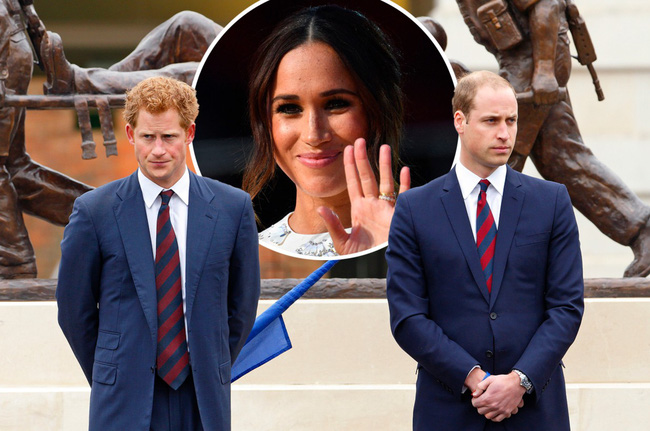
Each previous attempt to apply pressure has been met not with engagement, but with silence. And in royal terms, silence is rarely accidental. It is a signal — one that speaks of boundaries firmly drawn.
For William, maintaining those boundaries may be essential preparation for kingship. For Harry, they represent a door that remains painfully closed.
As the standoff continues, the question is no longer whether Harry wants to come back. He has made that clear. The real question is whether the monarchy — shaped increasingly by William’s vision — believes there is any version of return that does not reopen wounds it has worked hard to seal.
And so, the divide remains: one brother extending a hand, the other refusing to take it — not out of anger, but out of resolve.
What happens next may define not just the Sussexes’ future, but the monarchy’s next era.