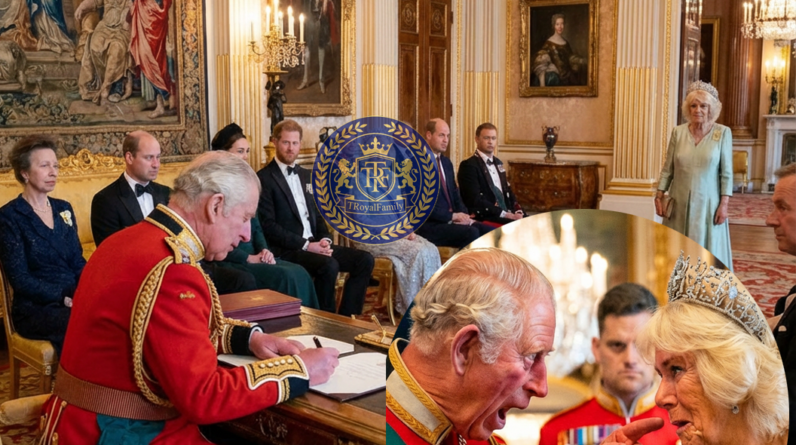
In a dramatic and unprecedented action, King Charles III has announced the removal of the Queen Consort title from Camilla, his wife. This follows an emergency meeting held at Buckingham Palace. Described as a historic turning point for the monarchy, this decision has triggered intense reactions from both the public and the media across the United Kingdom and the Commonwealth.
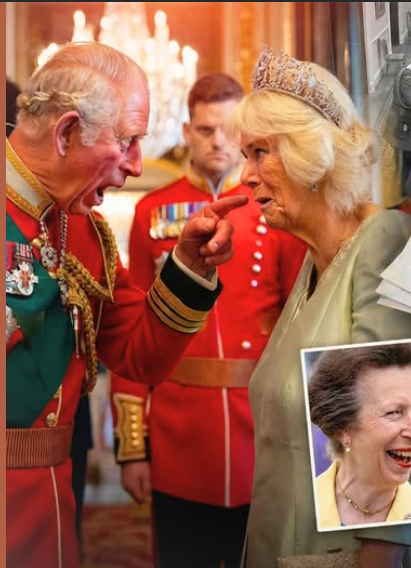
A Shocking Palace Announcement
A concise statement was released by Buckingham Palace confirming the decision: “His Majesty The King has instructed that the title of Queen Consort will no longer be used by Camilla, his wife, after a meeting with key advisors and senior members of the royal family. Details regarding her future title and role will be provided in due course.” The royal family has asked for privacy during this difficult time.
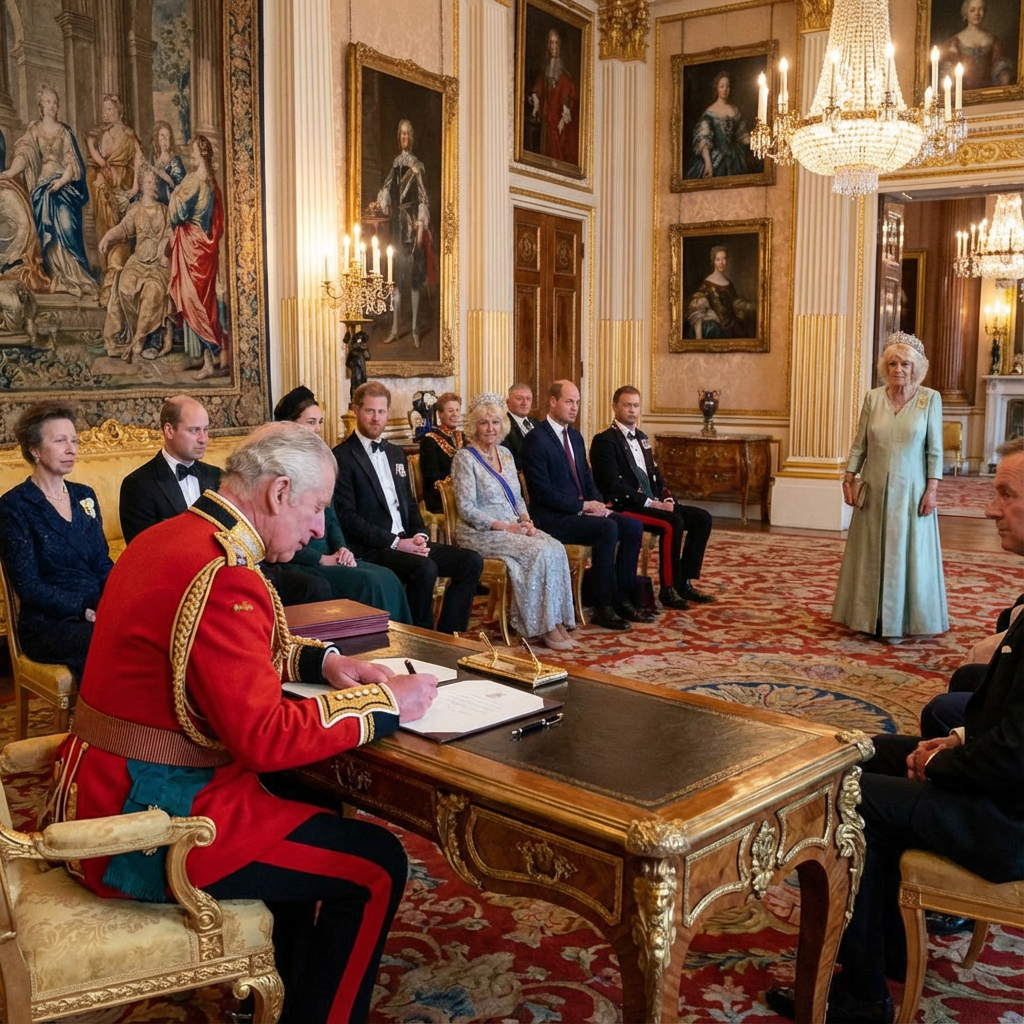
The announcement comes after a secretive meeting attended by key constitutional advisors and senior royals, Princess Anne and Prince William included. Sources describe an atmosphere of urgency, with significant security measures, such as phone confiscation and guarded hallways, indicating the seriousness of the situation.
Allegations of Overreach
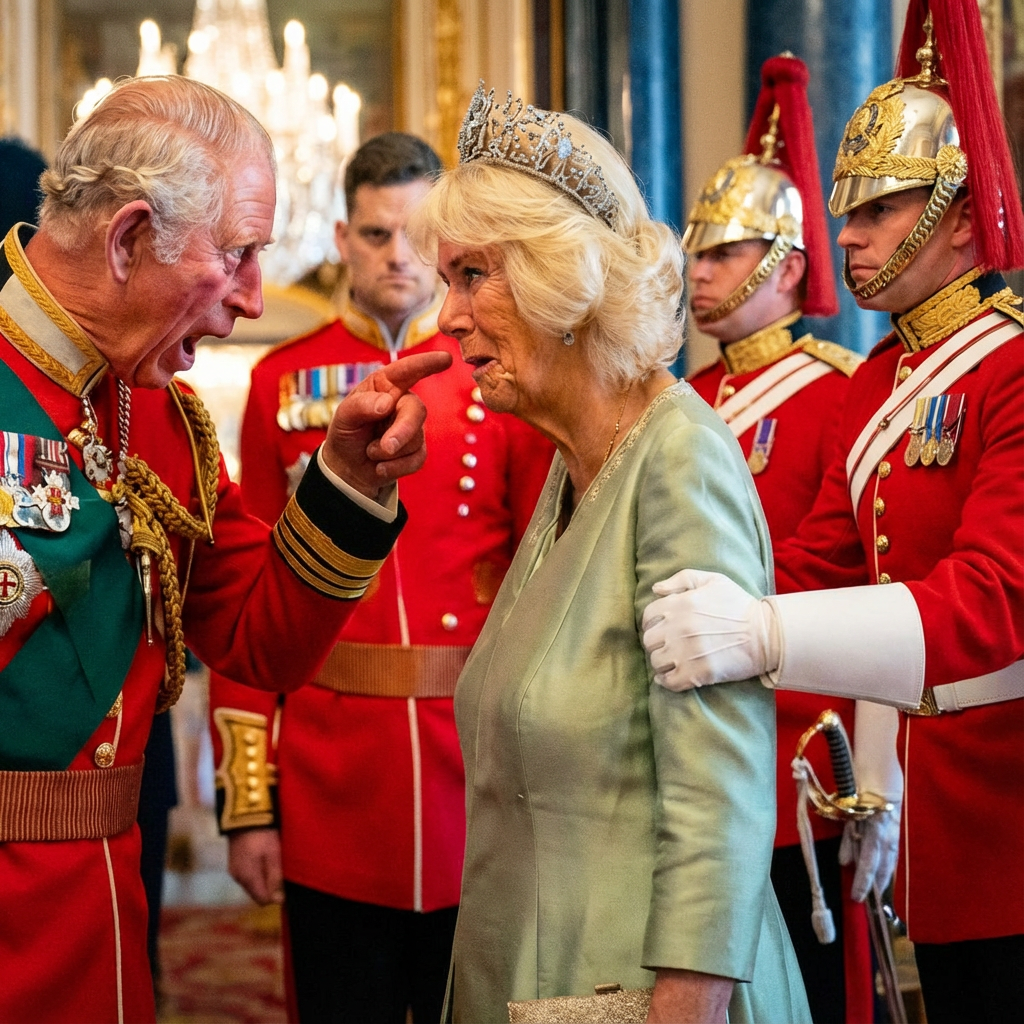
According to palace insiders, the decision resulted from months of growing concerns regarding Camilla’s alleged actions, which reportedly jeopardized the stability of the monarchy. Reports indicate that she was involved in activities that went beyond her ceremonial duties. This included unauthorized meetings with political figures and attempts to gain privileges and titles for her children, Laura Lopes and Tom Parker Bowles. These actions were seen as an effort to create a parallel influence within the monarchy, which raised questions about constitutional boundaries and royal neutrality.
Constitutional historian Dr. Alistair Finch stated, “The monarchy’s survival hinges on its impartiality. Allegations of a consort engaging in political maneuvering directly threaten its legitimacy.” While initial reports were dismissed as merely gossip, mounting evidence apparently left King Charles with no choice but to take decisive action.
A Monarchy in Crisis
This decision has been compared to the unrest following the death of Diana, Princess of Wales, whose lasting legacy continues to shape public opinion. Camilla has struggled to gain public acceptance and has often been overshadowed by the memory of Diana and the increasing popularity of Catherine, Princess of Wales. Public support for Catherine, who is perceived as a modern representation of royal dignity, has intensified scrutiny of Camilla’s role.
Public opinion is divided over the move. Supporters of Diana view it as a form of justice, with social media posts declaring, “The spirit of Diana has been honored.” In contrast, those who support Camilla argue that the decision is a harsh and politically motivated act, accusing the King of prioritizing public opinion over personal loyalty.
Rewriting Royal History
The royal household has begun the complex task of removing Camilla’s Queen Consort title from official documents, websites, and charters. Portraits and her royal cipher, “CR” (Camilla Regina), are being discreetly removed. Constitutional experts describe this as an extraordinary action, noting that there is no recent precedent for stripping a consort of their title.
While Camilla remains the King’s wife, her constitutional and public role has been significantly changed. Her recent appearance on the Buckingham Palace balcony, which was met with a muted public response, is believed to have been her final act as Queen Consort.
A Fragile Future
While aimed at safeguarding the monarchy’s integrity, King Charles’ decision has revealed deep divisions within the nation and the royal family. The Prince and Princess of Wales have emerged as stabilizing figures, and their silence speaks volumes about their dedication to a modern monarchy free from scandal. However, the future remains uncertain, and questions persist regarding Camilla’s future and the long-term effects on King Charles’ reign.
As the monarchy navigates this uncharted territory, the decision represents a crucial moment in its history, balancing tradition, duty, and the pressures of the modern world.